

ENTER THE METASPHERE

OUR NEWS

NEWS

All
All
UK
AUS
Intelligent monitoring transforms flood resilience
Latest News

Intelligent monitoring transforms flood resilience in flagship SuDs project

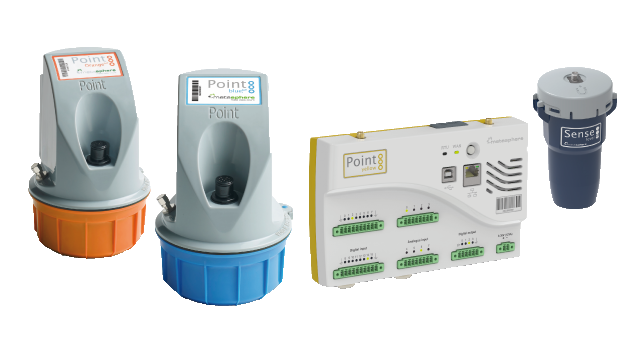
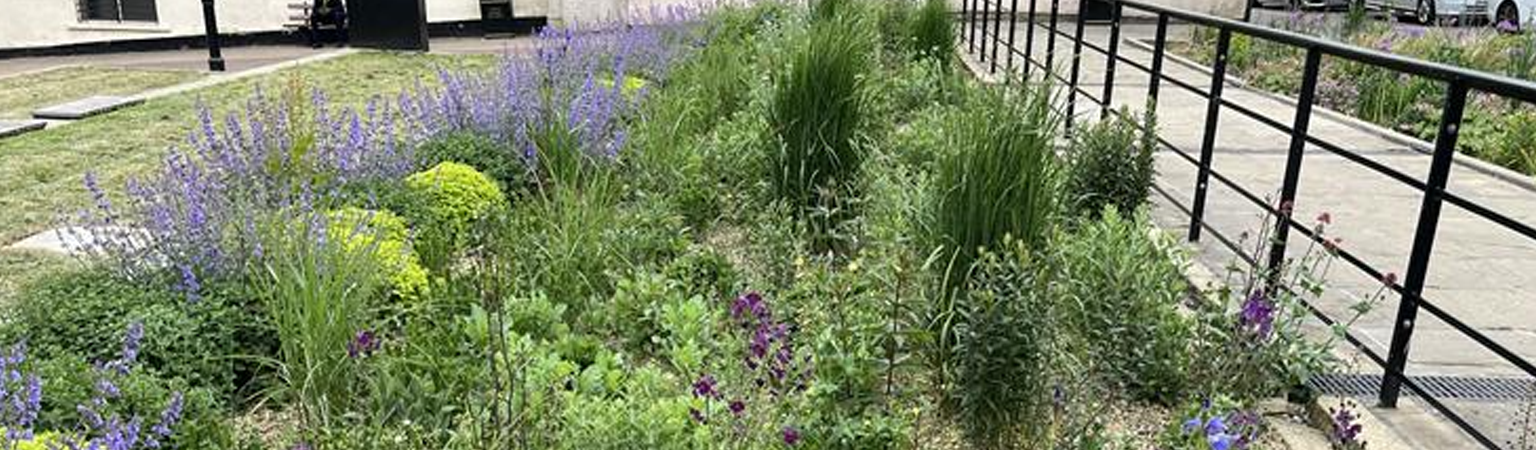
Once highly vulnerable to flooding, the historic market town of Mansfield, England, is being transformed by the UK’s largest sustainable drainage system (SuDS) project. This ambitious initiative is powered by Metasphere, a Grundfos company, and its intelligent monitoring solutions – which provide the real-time insights crucial for unlocking the potential of large-scale nature-based solutions (NbS). The project, led by Severn Trent Water in collaboration with the University of Sheffield and the University of Liverpool, showcases how these solutions are optimising network performance, enhancing local flood resilience, and promoting sustainable water management. Sowing the seeds of sustainability   In 2022, one of the UK’s largest water companies, Severn Trent Water, embarked on a multi-million pound project in Mansfield, Nottinghamshire, to implement a SuDS scheme aimed at mitigating flood risk and promoting sustainable water management within an urban environment. Metasphere’s Sense Level technology, a radar-based level sensor, was selected to monitor water levels within key components of the Mansfield SuDS scheme including downpipe planters, raingardens, bioswales, detention basins and specific points within the sewer network, demonstrating its significant versatility. These compact, battery-powered sensors collect data continuously, transmitting it via a mobile data network to a cloud-based platform. This provides Severn Trent Water and their academic partners with a clear and accessible overview of water levels. The real-time water level data captured by Metasphere’s monitoring solutions enables accurate calculation of drainage volumes and supports sophisticated hydrological analysis and modelling, providing a deeper understanding of the system’s behaviour under varying conditions – which is vital for effective management. Implementation and timeline Severn Trent Water identified Mansfield as being particularly vulnerable to the increasing threat of extreme rainfall events. In response, they initiated the ambitious £76 million Mansfield Sustainable Flood Resilience project, in partnership with key partners including the University of Sheffield and the University of Liverpool, design consultants Arup and AECOM, and contractors Galliford Try and Kier. This significant undertaking focuses on retrofitting the urban landscape to provide substantial additional storage capacity for surface water and is designed to effectively meet the anticipated future needs of the catchment. Having commenced in spring 2022, once completed in , the scheme will have capacity to store over 58 million litres of surface water. This substantial increase in storage is projected to deliver a significant reduction in flood risk for approximately 90,000 residents within Mansfield’s 109,000 population. “The Mansfield SuDS project is a landmark initiative for Severn Trent, setting a new benchmark for how we integrate nature-based solutions into urban water management,” says Angus Smith, Severn Trent’s lead project manager on the Mansfield Sustainable Flooding Resilience Scheme. “Metasphere’s intelligent monitoring technology has been absolutely critical to this, offering a clear understanding of how effectively rainwater runoff is being managed in real-time. Their Sense Level sensors provide the real-time, granular data we need to truly understand the performance of these complex systems.” Mansfield SuDS Project fact box: Scale: Approximately 20,000 individual blue-green infrastructure features Coverage: Over 15 hectares of the catchment area Biodiversity: Supporting the development of five


Read More »
Latest News

Enhanced technology leads smart sewer network revolution

Rapidly increasing uptake of remote sensor technology is revolutionising how sewer networks are monitored and managed across the world- and has prompted a firmware update from technology company Metasphere, writes Ryan Pearson, head of strategy. Metasphere was a pioneer in this field, launching its first remote sensor solution for sewer networks in 2021. This innovative approach is already providing substantial benefits to progressive water companies globally, enabling them to proactively manage their infrastructure and enhance environmental protection. Reflecting its ongoing commitment to innovation, Metasphere has just announced a major firmware update for its Sense Level sewer level monitors. This update reinforces the company’s dedication to supporting the water sector in achieving critical environmental targets, such as reducing storm overflow spills. Proactive management Remote sewer network monitoring offers a multitude of advantages, including the proactive identification of blockages, prevention of overflows, reduced manual inspections and associated costs, improved employee safety, and real-time data insights for superior network management and regulatory compliance. However, its implementation presents several key challenges. The inherent variability of sewer environments, encompassing diverse pipe and chamber sizes, materials, and flow conditions, complicates standardized sensor deployment. Additionally, harsh conditions and seasonal weather variations can significantly impact device effectiveness and battery life. “Another improvement is optimising the battery life,” explains John Alimi, devices product manager at Metasphere. “This means the devices can last longer in the field, resulting in fewer maintenance visits. Overall, our customers achieve significant operational efficiency gains from this combination of features and improvements.” Just as with mobile phones, connectivity can be unreliable above ground, let alone in hard-to-reach underground locations. This necessitates resilient communication solutions. “One of the biggest challenges in precision sewer level monitoring is reliable connectivity,” says Alimi. “You can deploy the most advanced sensing technologies, such as radar and ultrasonic, but without connection, the system becomes very ineffective.“If the system isn’t connected, you can’t monitor conditions in real-time, respond to issues, or make informed decisions. With dynamic network switching, we’re able to optimise for better connection during installation. This ensures that the connectivity rate goes up, giving more reliable visibility across the network – essentially avoiding costly fines by identifying blockages and protecting the environment from spills.” Finally, cost-effectiveness remains a concern, requiring a careful balance between the benefits of remote monitoring and the investment in equipment, installation, and maintenance. John Alimi, Product Manager for Devices, Metasphere Optimised operations Remote network monitoring has myriad advantages when optimised for these challenges. With the right sensors in place, water companies benefit from optimised resource allocation, reduced operational costs associated with reactive repairs, and improved network efficiency. Their customers experience fewer disruptions due to flooding and sewer backups, leading to increased satisfaction and peace of mind. Importantly, the environment reaps the rewards through a decrease in pollution incidents – safeguarding water quality and protecting ecosystems. Metasphere pioneered remote sensor solutions for sewer networks in 2021, and the company currently has over 60,000 Sense Level sewer level monitors installed across Wessex Water, Southern Water, Thames Water, Severn

Read More »
Latest News

In real-time sewer control, we trust

The importance of building trust in real-time controls systems for sewer networks will be explored in a roundtable at World Water-Tech, hosted by Chengzi Chew, chief intrapreneur at Grundfos FutureLab, who shares his thoughts ahead of the event.    The title of your roundtable at World Water-Tech is – Overcoming trust issues: what does it take to adopt real-time control systems for sewer networks? Whose trust will you be talking about?    That is the first question – whose trust are we addressing? And the likely answer is that there are several levels of stakeholder.     The first is the regulators – if some kind of automated system is controlling this network, from a regulatory perspective, is there anything that would convince the regulators that there is a particular path for operations to go down?    Of course better control of the networks can help water companies regain trust of their customers too. It will take more work on that front, but showing how real-time control works on different scenarios and events could have an impact.    What is the impact on operators and how can trust in new technologies and approaches be built?    Operations is done by operators, of course, so technology changes can have an impact on their role and they will have concerns around how their jobs will change. I see real-time control systems for sewer networks as being like autopilot for aeroplanes – it can be used for a lot of things, but a plane still needs a pilot.     In the future, real-time control will help run sewer networks better, so that much more can be done with them. Once this technology is proven to work, it could really help operators within these utilities manage wastewater much better, but they will still be needed to run and oversee the systems.   In terms of technologies, how far along the road to real-time control of sewerage is the water sector?    At present, Grundfos, including our stand-alone data and telemetry division – Metasphere, can carry out the analytics and identify where incidents are occurring in the network. At World Water-Tech, we will be looking at the next step: now that you know what is happening in the network, what could you do with that information?     One of the pathways could be more real-time control. We need more collaborative research and innovation, rather than simply continuing with existing technologies. Feedback from water companies will help determine precisely where this should be applied.    What is Grundfos FutureLab and how does it nurture innovation?     The role of FutureLab is to explore new business opportunities in the water space for Grundfos. We have an innovation process for this work, and we are looking at ideas that could have a big impact on sustainability and resilience and would also make good business sense.     At FutureLab, we have created a structured innovation process with three distinct phases, typically starting with an idea and desktop studies to find

Read More »
Metasphere UK office
Latest News

Metasphere achieves flawless ISO recertification audits

We are thrilled to announce Metasphere has successfully passed all four of its ISO recertification audits with zero findings. ISO certifications are internationally recognised standards that demonstrate an organisation’s commitment to meeting specific requirements. They provide a framework for consistently delivering high-quality products and services, minimising environmental impact, ensuring a safe and healthy workplace, and protecting sensitive information. This outstanding achievement underscores our commitment to quality, environmental responsibility, health and safety, and information security. Metasphere have retained certifications for: ISO 9001:2015 (Quality Management) ISO 14001:2015 (Environmental Management) ISO 45001:2018 (Occupational Health and Safety Management) 1 ISO 27001:2022 (Information Security Management) The auditor’s feedback stated: “This is an extremely well-structured and organised business management system and reflects the commitment and hard work that the assurance team and business place on ensuring its compliance.” June Irving, Metasphere’s HR and assurance manager, said: “This recognition is a source of immense pride for the entire Metasphere team and reinforces our commitment to maintaining these rigorous standards.” “We extend our sincere gratitude to our dedicated employees for their hard work and commitment in achieving this exceptional result.”

Read More »
Ryan Pearson, Head of Strategy, Metasphere
Articles

AMP8 delivery requires data for nature approach

A data-driven approach coupled with greater use of nature-based solutions offers a promising path for UK water, says Ryan Pearson, head of strategy at Metasphere, ahead of his panel appearance at the WWT Wastewater Conference on 28 January 2025. The immediate challenge facing the UK water sector lies in resource limitations such as skilled labour shortages and the sheer volume of work required in AMP8 – the regulatory asset management plan period 2025-30. This creates an opportunity approach infrastructure delivery and management in a very different way. Leveraging data and automation – including integrated telemetry systems and artificial intelligence (AI) – can significantly improve efficiency and reduce the human workload needed for project management, decision-making, and programme execution. Data for nature Currently, the default option to reducing stormwater overflows into rivers and seas is to install concrete storage tanks, which are costly and, while effectively holding back water, provide few additional benefits. By using data insights, water companies can implement nature-based solutions (NbS) at scale: holding back rainfall in the catchment, engaging communities and other stakeholders, and achieving positive outcomes for wildlife, people and the environment. Data provides the opportunity to examine the causes of overflows and identify where the hydraulic overload is coming from. Could it be infiltration of groundwater into the sewer network, or the misconnection of household appliances? Once all sources have been identified, decisions can be made on which prevention interventions should be prioritised. This approach opens-up opportunities for greater use of nature-based solutions, because the data can create a robust business case. Instead of pouring more concrete, attractive green spaces can be created, engaging stakeholders and local communities and creating greater biodiversity. In the context of climate change, the impact of cloudbursts – localised intense rainfall, and urban heat-spots can be mitigated, alongside reducing overflows to surface waters. Flood resilience The Mansfield Sustainable Flood Resilience project, undertaken by Severn Trent Water (STW) ahead of the 2022 Commonwealth Games in Birmingham, is worth revisiting as an example of what is possible when data and nature come together. The scheme was the largest sustainable drainage system (SuDS) in the UK at the time, and the water company required cost effective, reliable solutions that could capture rainwater and slow the pace of rainwater entering the sewage network, whilst providing critical level data on flooding risk in the network. Metasphere and other technology companies provided smart level monitoring solutions to support the SuDS scheme, with Metasphere’s Sense Level monitors helping track the pace at which rainwater infiltrates the network. The devices use contactless radar sensor technology to monitor in-sewer water levels and send data to Canvas, Metasphere’s data collection and device management platform. From there, users can visualise and access the data in near real-time on Palette, Metasphere’s visualisation platform. Data is presented concisely to provide insights for operational efficiency of the wastewater network and allow proactive management to reduce the likelihood of flooding. This combination of green space creation, alongside data collection, management and visualisation, has given the

Read More »
Digitising the Water Sector
Articles

Digitising the Water Sector: Interview with Phil Tomlinson, Metasphere

Digitising the Water Sector: Interview with Phil Tomlinson. Digitising the Water Sector. How can digital solutions address Combined Sewer Overflows and optimise current water infrastructure to make the industry climate- resilient? The World Water Tech team recently caught up with Phil Tomlinson to discuss the biggest roadblocks, opportunities and strategies for providing effective, practical and weather-proof solutions. Metasphere is an expert in targeting and reducing Combined Sewer Overflows. But how big a problem are Combined Sewer Overflows (CSOs) for the water sector? The reduction of the use of CSOs is a huge problem, and are a safety valve against hydraulic overload – spilling is what they are designed to do. When thought about in this way the complexity starts to become obvious. UK networks were simply not designed for either the current number of connections (people/properties) or today’s weather patterns, without even getting into the challenges around the right to connect, illegal connections or misuse, so not only is it a big problem but the challenge is ratcheting. Getting visibility of these issues and building real-time operational behaviours of the networks is critical in order to mitigate the problems we are now seeing as common place. What are the biggest causes of CSOs? And how does Metasphere help water utilities reduce their CSOs? Metasphere provide solutions that work in one of two ways. Historically, it’s about the implementation of monitoring solutions to alert utilities when their CSOs have been or are approaching use, whilst this is still very much part of the utilities arsenal, this can only ever have limited impact preventing a spill happening. We are now at the point as has been reported in the past couple of weeks that all such sites in England are now monitored and data will be provided to the environment agency on an annual basis for retrospective performance (EPA) reporting. With some major changes in primary and secondary legislation over the past couple of years coupled with an ever increasing public awareness (and continued mainstream media attention) of the impact of these failures is increasingly understood but tolerance for their existence let alone usage has disappeared. So with a total shift away from their usage comes the significant challenge of prevention! Some of the hurdles here are also much greater than say 20 years ago and whilst the supporting technology (and the skills to utilise it) has moved forward enormously so has the demand on the network through population growth, demographic changes, climate change and an aging asset base. When all this is considered alongside appetite for investment, the increasing zero tolerance to failure and all the other factors at play in this area it is certainly coming a wicked problem. Are Internet of Things (IoT) solutions the way to achieve ‘zero escapes’? How does robust data collection and monitoring give utilities the tools they need to achieve their targets around CSOs? For many years utility companies have utilised telemetry systems to act as their ‘eyes and ears’ into their remote operations.

Read More »

UPCOMING EVENTS

25- 26 February 2025
London, UK
20 March 2025
Manchester, UK
2 - 3 April 2025
Bendigo, Australia
20 - 21 May 2025
Birmingham, UK
17 - 18 September 2025
Birmingham, UK