
Once highly vulnerable to flooding, the historic market town of Mansfield, England, is being transformed by the UK’s largest sustainable drainage system (SuDS) project.
This ambitious initiative is powered by Metasphere, a Grundfos company, and its intelligent monitoring solutions – which provide the real-time insights crucial for unlocking the potential of large-scale nature-based solutions (NbS).
The project, led by Severn Trent Water in collaboration with the University of Sheffield and the University of Liverpool, showcases how these solutions are optimising network performance, enhancing local flood resilience, and promoting sustainable water management.
Sowing the seeds of sustainability
In 2022, one of the UK’s largest water companies, Severn Trent Water, embarked on a multi-million pound project in Mansfield, Nottinghamshire, to implement a SuDS scheme aimed at mitigating flood risk and promoting sustainable water management within an urban environment.
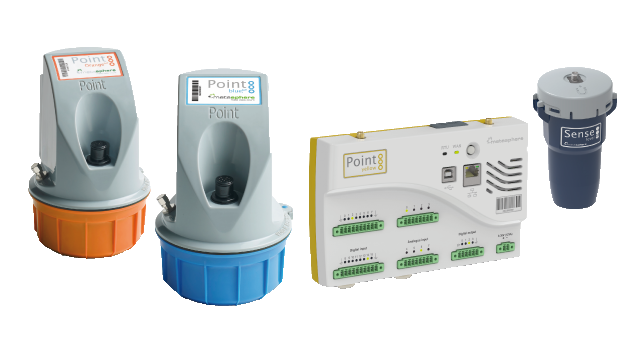
Metasphere’s Sense Level technology, a radar-based level sensor, was selected to monitor water levels within key components of the Mansfield SuDS scheme including downpipe planters, raingardens, bioswales, detention basins and specific points within the sewer network, demonstrating its significant versatility.
These compact, battery-powered sensors collect data continuously, transmitting it via a mobile data network to a cloud-based platform. This provides Severn Trent Water and their academic partners with a clear and accessible overview of water levels.
The real-time water level data captured by Metasphere’s monitoring solutions enables accurate calculation of drainage volumes and supports sophisticated hydrological analysis and modelling, providing a deeper understanding of the system’s behaviour under varying conditions – which is vital for effective management.
Implementation and timeline
Severn Trent Water identified Mansfield as being particularly vulnerable to the increasing threat of extreme rainfall events. In response, they initiated the ambitious £76 million Mansfield Sustainable Flood Resilience project, in partnership with key partners including the University of Sheffield and the University of Liverpool, design consultants Arup and AECOM, and contractors Galliford Try and Kier.
This significant undertaking focuses on retrofitting the urban landscape to provide substantial additional storage capacity for surface water and is designed to effectively meet the anticipated future needs of the catchment.
Having commenced in spring 2022, once completed in , the scheme will have capacity to store over 58 million litres of surface water. This substantial increase in storage is projected to deliver a significant reduction in flood risk for approximately 90,000 residents within Mansfield’s 109,000 population.
“The Mansfield SuDS project is a landmark initiative for Severn Trent, setting a new benchmark for how we integrate nature-based solutions into urban water management,” says Angus Smith, Severn Trent’s lead project manager on the Mansfield Sustainable Flooding Resilience Scheme.
“Metasphere’s intelligent monitoring technology has been absolutely critical to this, offering a clear understanding of how effectively rainwater runoff is being managed in real-time. Their Sense Level sensors provide the real-time, granular data we need to truly understand the performance of these complex systems.”
Mansfield SuDS Project fact box:
- Scale: Approximately 20,000 individual blue-green infrastructure features
- Coverage: Over 15 hectares of the catchment area
- Biodiversity: Supporting the development of five hectares of biodiversity-rich habitat
- SuDS components:
- Tree pits: Underground grids to capture and slow rainwater infiltration
- Bioswales: Sloping, grassed channels for surface runoff storage and slow release
- Detention basins: Larger storage areas for rainwater seepage, some with permanent wildlife areas. Designed to prevent surface water entering the sewer network and alleviate flooding
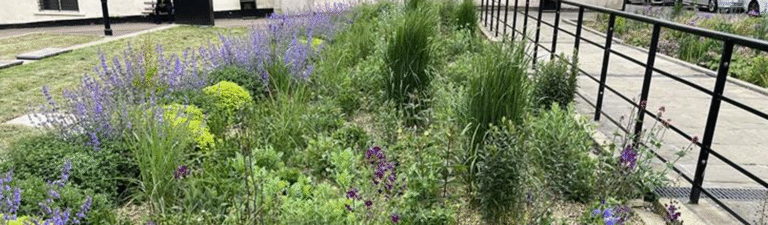
- Rain gardens: Plant and soil systems to retain and slow runoff from hard surfaces, with layers for soaking, storing, and filtering water
- Permeable paving: Used in car parks, driveways and walkways to allow water infiltration
Bridging research and real-world applications
The integration of Metasphere’s intelligent Sense Level monitoring technology, coupled with the academic support provided by Sheffield University, underscores the power of collaborative innovation in addressing water management challenges.
The University of Sheffield’s involvement stemmed from their established expertise in SuDS research, particularly through the Urban Green Design & Modelling of SuDS (DaMS) programme. This proactive engagement ensured academic insights could be directly applied to the real-world interventions in Mansfield, accelerating the translation of research into practice.
Dr Simon De-Ville, a lecturer in water & environmental engineering at the University of Liverpool, plays a central role through the University of Sheffield. Alongside Virginia Stovin, professor of green infrastructure for stormwater management at the University of Sheffield, De-Ville oversees the project monitoring and evaluation of the performance of those interventions over time.
“This focus on rigorous evaluation is crucial for understanding the long-term effectiveness of SuDS and informing future designs,” says De-Ville.
Data-driven insights
“Comprehensive data plays a critical role in optimising SuDS performance. While the principle of understanding inflow, interaction within the system, and outflow seems simple – the practicalities present significant challenges,” he explains.
Access to high-resolution spatial rainfall data remains a key gap and prompted the project team in Mansfield to deploy their own network of rain gauges. In addition, accurately determining the effective catchment area for ground-level SuDS features poses uncertainty due to complex urban topography and modifications to the landscape such as paving.
“Beyond inflow, flow measurement across the complete operational range of SuDS is vital. While extreme flow events are critical for safety assessments, understanding the low flow or ‘dribbles’ is essential for validating hydrological and hydraulic models and gaining a holistic understanding of system performance under various conditions,” adds De-Ville.
Beyond academic evaluation
While the University’s initial focus was on long-term performance evaluation, the availability of real-time data through Metasphere’s technology has revealed additional benefits, particularly in the realm of asset management.
De-Ville stresses that continuous monitoring can serve as an “asset health monitor”, providing timely alerts about potential issues such as prolonged drainage times. This enables more proactive maintenance interventions, optimising the lifespan and effectiveness of the SuDS infrastructure beyond the initial research period.
Challenges overcome
One notable challenge encountered during the project was a significant network outage affecting the mobile data carrier used for data transmission. This outage, which lasted for an extended period of approximately one-and-a-half months, temporarily disrupted data flow – highlighting the reliance on external communications infrastructure and the importance of robust communication strategies in the event of downtime.
Another significant practical challenge was the vulnerability of above-ground monitoring equipment to theft and vandalism in public spaces.
Recognising the vulnerability of above-ground monitoring equipment in public spaces, Metasphere designed Sense Level units for discreet installation within existing sewer infrastructure, safely under access covers. This innovative approach eliminates the risk of theft and vandalism, underscoring the value of fit-for-purpose industrial solutions in real-world urban deployments and offering a blueprint for future monitoring strategies.
Benefits of SuDS
SuDS offer valuable local storage and flow attenuation, enhancing resilience and mimicking natural hydrological processes. While specific benefits data for the Mansfield site is still being gathered until 2027, the advantages of SuDS schemes include:
- Enhanced flood resilience: Natural infiltration and storage reduce the volume and rate of surface water runoff, mitigating flood risk
- Improved water quality: Vegetation and soil within SuDS features filter pollutants from stormwater runoff
- Increased biodiversity: Creation of green spaces provides habitats for wildlife
- Community benefits: Rain gardens and green infrastructure can enhance the aesthetic appeal of urban areas and provide recreational spaces
Metasphere’s Sense Level technology directly contributes to these benefits by providing the data necessary for effective management and optimisation of the SuDS, ensuring its long-term performance and maximising its positive impact.
Shaping the future of water management
The significance of the Mansfield project as the UK’s largest retrofit SuDS initiative cannot be overstated. Replicating such projects nationwide could lead to substantial reductions in flood risk and decreased combined sewer overflow (CSO) activations, a critical focus for the water industry in the 2025-30 asset management plan (AMP8) cycle.
The long-term implications of the detailed monitoring data extend to refining SuDS design practices and validating hydrological models. This evidence-based approach is crucial for ensuring the suitability and effectiveness of SuDS deployments at a wider scale in the future. Meanwhile, parallel research into the amenity and biodiversity benefits of SuDS is currently being funded by Severn Trent through the Water Infrastructure & Resilience Centre for Doctoral Training (WIRe CDT), which sponsors research projects that are training 60 PhD students to deliver a resilient water future.
The SuDS project in Mansfield, supported by Metasphere’s SenseLevel technology, represents a significant step towards sustainable urban water management. As the water industry increasingly embraces nature-based solutions under the new 2025-30 AMP cycle, this project marks Metasphere’s entry into the SuDS sector – providing the company with a valuable real-world example of the applicability and benefits of their intelligent monitoring solutions for nature-based drainage systems.